
THE DAM IS BREAKING
A landmark verdict, a confession from Big Tech, and what my students taught me about fighting back

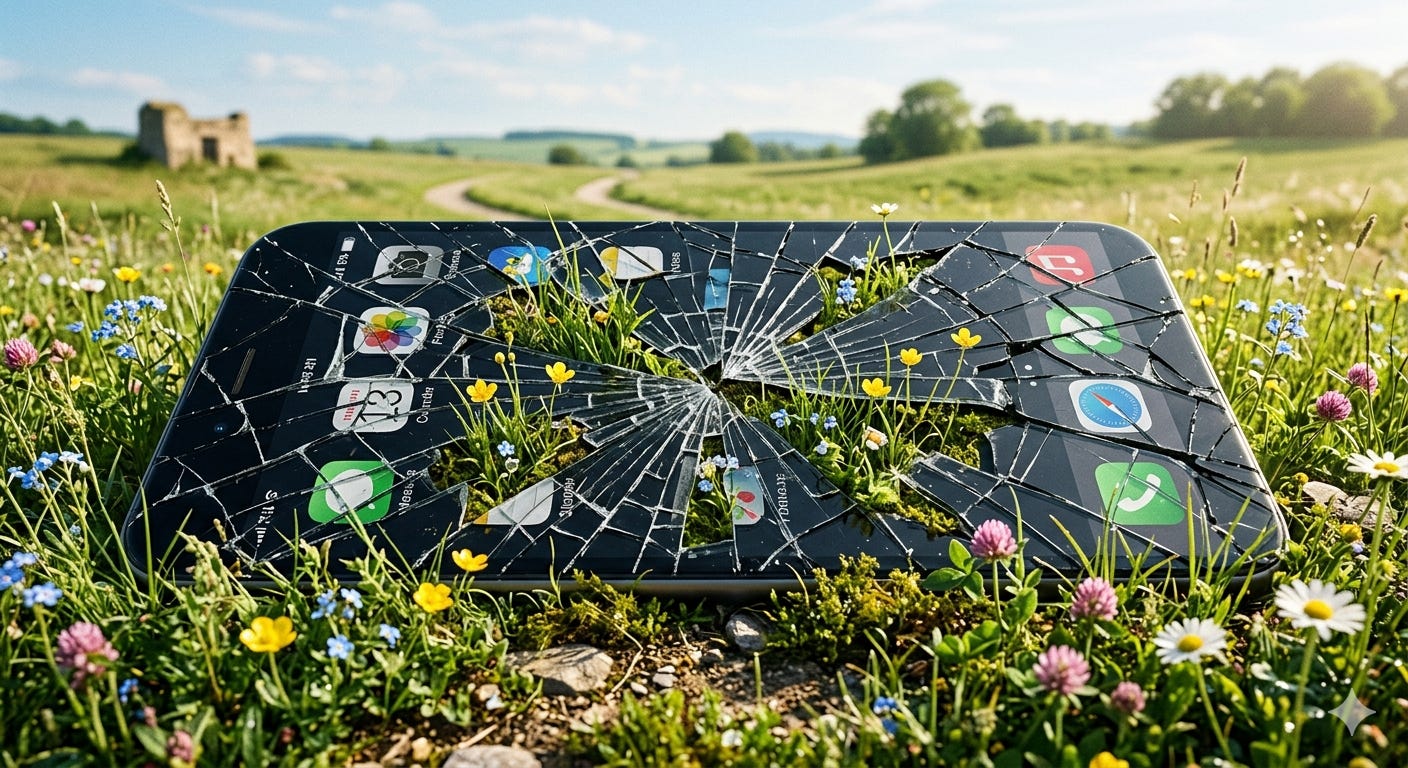
Something shifted this week. Maybe it’s a crack. Maybe it’s a flood. But for the first time in a long time, I believe the tech oligarchy is actually scared.
Let me tell you what happened.
The Verdict They Said Would Never Come
On Wednesday, March 25th, a Los Angeles jury did something no jury had ever done before. They found Meta and YouTube negligent in the design and operation of their social media platforms — a verdict that could reshape how we hold Big Tech accountable for an entire generation of harmed children.
The plaintiff — a 20-year-old woman referred to only as Kaley — accused Meta, Google’s YouTube, Snap, and TikTok of intentionally hooking her as a child and causing her to develop anxiety, body dysmorphia, and suicidal thoughts. Snap and TikTok settled before trial.
The jury found Meta 70% responsible and YouTube 30% responsible, awarding $3 million in compensatory damages. Jurors later recommended an additional $3 million in punitive damages after concluding the companies had acted with malice, oppression, or fraud in harming children.
The lawyers for the plaintiff said it plainly:
“For years, social media companies have profited from targeting children while concealing their addictive and dangerous design features. Today’s verdict is a referendum — from a jury, to an entire industry — that accountability has arrived.”
And it wasn’t just California. The day before, a New Mexico jury ordered Meta to pay $375 million after finding the company misled users about the safety of its platforms and enabled child sexual exploitation.
Two juries. Two days. Two verdicts.
Legal experts are already drawing comparisons to the 1990s crusade against Big Tobacco — a sustained legal campaign that forced an industry to stop targeting minors. The lawyers in this case view the Los Angeles verdict as a sign that the dam is breaking.
This isn’t a fluke. This case is a bellwether — a test case tied to roughly 2,000 other pending lawsuits brought by parents and school districts who argue that social media giants should be considered manufacturers of defective products. A federal case is slated to begin in June in Oakland. The docket is full. The industry is on trial.
Meta and Google, predictably, plan to appeal. Meta’s spokesperson insisted that teen mental health is “profoundly complex and cannot be linked to a single app.” Google claimed the case “misunderstands YouTube, which is a responsibly built streaming platform.”
The jury disagreed.
The Drug Dealer Tells You Not to Get Hooked
The same week the verdict dropped, Tim Cook sat down on Good Morning America and delivered a message that made me stop cold.
“I don’t want people using them too much,” he said, referring to iPhones. “I don’t want people looking at the smartphone more than they’re looking in someone’s eyes. Because if they’re just scrolling endlessly — this is not the way you want to spend your day. Go out and spend it in nature.”
Let that sink in. The CEO of Apple — the company that put a supercomputer in every pocket and built the most profitable product in human history — is telling you to put it down.
On one level, it’s almost funny. The interview aired on the same day Apple announced they were putting ads inside Apple Maps. The drug dealer telling you not to get hooked while restocking the supply. The internet noticed.
But I don’t want to get lost in the irony. Because here’s what I think is actually happening: the people who built this system are starting to feel the heat. The lawsuits. The legislation. The parents. The neuroscience. The kids themselves.
Stanford’s Maris Loeffler said the negative effects of screen time are “insidious.” The negative effects would be “minimal” if it happened occasionally — “but if it becomes a habit, day after day, month after month, this behavior can take a toll.”
Studies have shown that increased screen time can negatively impact learning, memory, and mental health, contribute to early neurodegeneration, disrupt sleep, and decrease gray matter volume in the brain.
Tim Cook knows this. His engineers know this. And now a jury of twelve ordinary Americans in Los Angeles knows it too.
What My Students Taught Me
Here’s where I learn more than any news can teach me.
This semester, I asked my students to try something: download the Fluid Focus app and actually track their phone use, then use the app to regain more control of their day on screen. Not as an assignment they’d check off. As an experiment in self-knowledge and a pilot for the school.
What happened didn’t surprise me.
Most students embraced the opportunity, some were unable to make the break. The data shows the students were able to reduce their screen time by thousands of hours in a 3 week period. Several students shared they are sleeping better, have more focus, and are socializing more. Others are sharing awareness regarding the sheer volume of time they normally spend doom scrolling. The pull of the feed even when they were bored by it. One student told me she’d picked up her phone 87 to 100 times in a single day without realizing it.
But here’s the part that matters: they get it, and if they can’t quite resolve it yet, they are aware. That in itself is a huge first step in pushing back. No longer will they or younger generations be blind to the damage the tech oligarchy does to them.
That’s the thing about this generation that I don’t think gets enough credit. They are simultaneously the most addicted and the most aware. They grew up inside the machine. They know what it does to them. And more and more, they want out — or at least they want control.
Fluid Focus gave them data. Data gave them agency. Agency gave them back something they didn’t even know they’d lost: their own attention.
The Tide Is Turning. Maybe.
Let’s be frank. I am cautiously hopeful for the first time in years. But I’m not naive.
The verdicts matter. The science matters. The Tim Cook moment — for all its irony — matters, because it signals that even the architects of this system can no longer pretend the harm isn’t real.
But here is what is also true: the tech oligarchy still has enormous power. Meta, Google, Apple, and their allies have spent billions shaping regulation, lobbying Congress, and quietly defunding the regulatory bodies that might hold them accountable. And in the current political environment — with a Trump administration that has shown little appetite for taking on the tech industry’s biggest players — the path from courtroom victories to systemic change is long and uncertain.
The legal system is doing what the political system has failed to do. Juries are reaching verdicts that Congress won’t pass and the FTC can barely pursue. That’s not nothing. But it’s also not enough on its own.
The dam is cracking. Water is coming through. Whether it becomes a flood depends on what we do next — as citizens, as parents, as educators, as voters, and yes, as consumers who still have choices to make about whose platforms we feed and whose we starve.
My students are already making those choices.
Here are 5 rules I encourage everyone to do today
No phone in the bedroom at night
Turn your smartphone to gray scale
No smartphone on table at dinner or meetings or restaurants
No smartphone at the gym or when being physically active
Get outside more
Start there. Take your life back.
If this resonated, share it with someone who needs to see it. And if you’re a parent, an educator, or anyone who works with young people — consider encouraging your school to subscribe to Fluid Focus or use similar personal apps like Brick or Blok. Not to police them. To illuminate.